Autumn turns patios into a plant evacuation zone. The hibiscus wants a sunny room, the dahlia wants a nap, and the pothos may be carrying aphids in its luggage. Before moving every pot into your living room, make three decisions: who needs warmth, who needs dormancy, and who can stay outside with protection. Here’s the five-step plan.
1. Don’t Invite Everybody Inside
Identify each species and check its cold hardiness. Pothos that summered outside needs a warm spot with suitable indoor light. In freezing climates, dahlias can be lifted and stored as dormant tubers. Hardy perennials may stay outdoors, but their roots are more vulnerable in exposed pots than in garden soil.
Expert move: For unprotected outdoor containers, Illinois Extension suggests choosing perennials rated about two USDA Zones colder than your location. That’s a useful buffer, not a survival guarantee.
Label each pot “grow indoors,” “store dormant,” or “protect outside.”
2. Let the Forecast, Not the Calendar, Call the Shots
Compare predicted nighttime lows with each plant’s tolerance. Many tropical houseplants should return indoors when nights approach 50°F; some suffer chilling injury well before freezing.
Don’t wait for frost on the lawn or assume everyone in Zone 7 moves inside on the same date.
Write the plant’s temperature trigger on its tag, then act before the forecast reaches it. A covered porch helps only if it actually stays warm enough.
3. Check the Guest List for Pests
Turn over leaves; examine stem joints, pot rims, and drainage holes. Look for aphids, scale, mealybugs, whiteflies, and spider-mite webbing.
Remove debris and rinse suitable plants outdoors. Allow foliage to dry.
Separate incoming plants from established houseplants for three to four weeks, checking them regularly. If you find pests, identify them and use a treatment labeled for that plant and setting only when needed.
Tiny problems have a talent for becoming expensive roommates.
4. Give Them the Right Window, Not Just Any Window
If weather allows, shift plants into lower outdoor light for a week or two before bringing them in.
Once inside, match light to species. Many foliage plants appreciate bright indirect light; citrus generally needs direct sun and may require a grow light.
Avoid heating vents, cold window glass, and drafts. Heated rooms can be very dry, so a humidifier may help humidity-loving species; constant leaf misting isn’t a substitute.
Some temporary leaf drop is normal after a move.
5. Retire Your Summer Watering Schedule
Feel the potting mix below the surface and consider the plant’s needs before watering. When watering is due, moisten the root ball and let excess drain.
Cut back fertilizer when growth slows; dormant tubers need different storage care from actively growing houseplants.
Don’t forget outdoor evergreens: their containers may still need water during dry, unfrozen periods.
Winter care means responding to conditions, not abandoning the watering can.
Your USDA Zone Is a Starting Point, Not a Move-In Date
USDA Zones describe average annual extreme minimum temperatures, not first-frost dates. The specific plant and local forecast determine when to act.
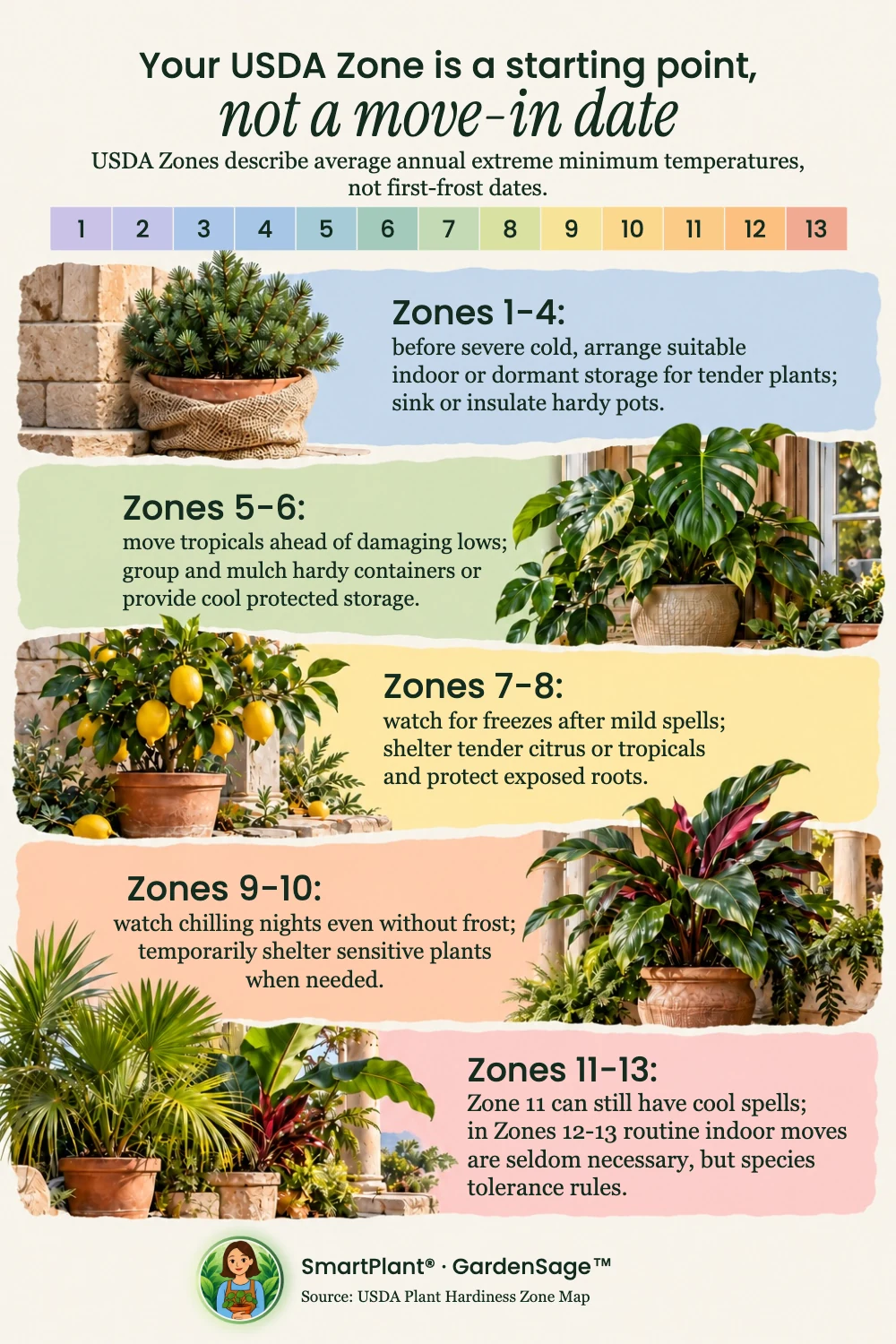
Your Winter Action Plan by USDA Zone
- Zones 1–4: Before severe cold, arrange suitable indoor or dormant storage for tender plants; sink or insulate hardy pots.
- Zones 5–6: Move tropicals ahead of damaging lows; group and mulch hardy containers or provide cool protected storage.
- Zones 7–8: Watch for freezes after mild spells; shelter tender citrus or tropicals and protect exposed roots.
- Zones 9–10: Watch chilling nights even without frost; temporarily shelter sensitive plants when needed.
- Zones 11–13: Zone 11 can still have cool spells; in Zones 12–13, routine indoor moves are seldom necessary, but species tolerance rules.
Plant Reality Check: A hardiness label doesn’t protect roots in an exposed pot.
Match each plant to the right winter home, and spring won’t feel like a botanical missing-person report.